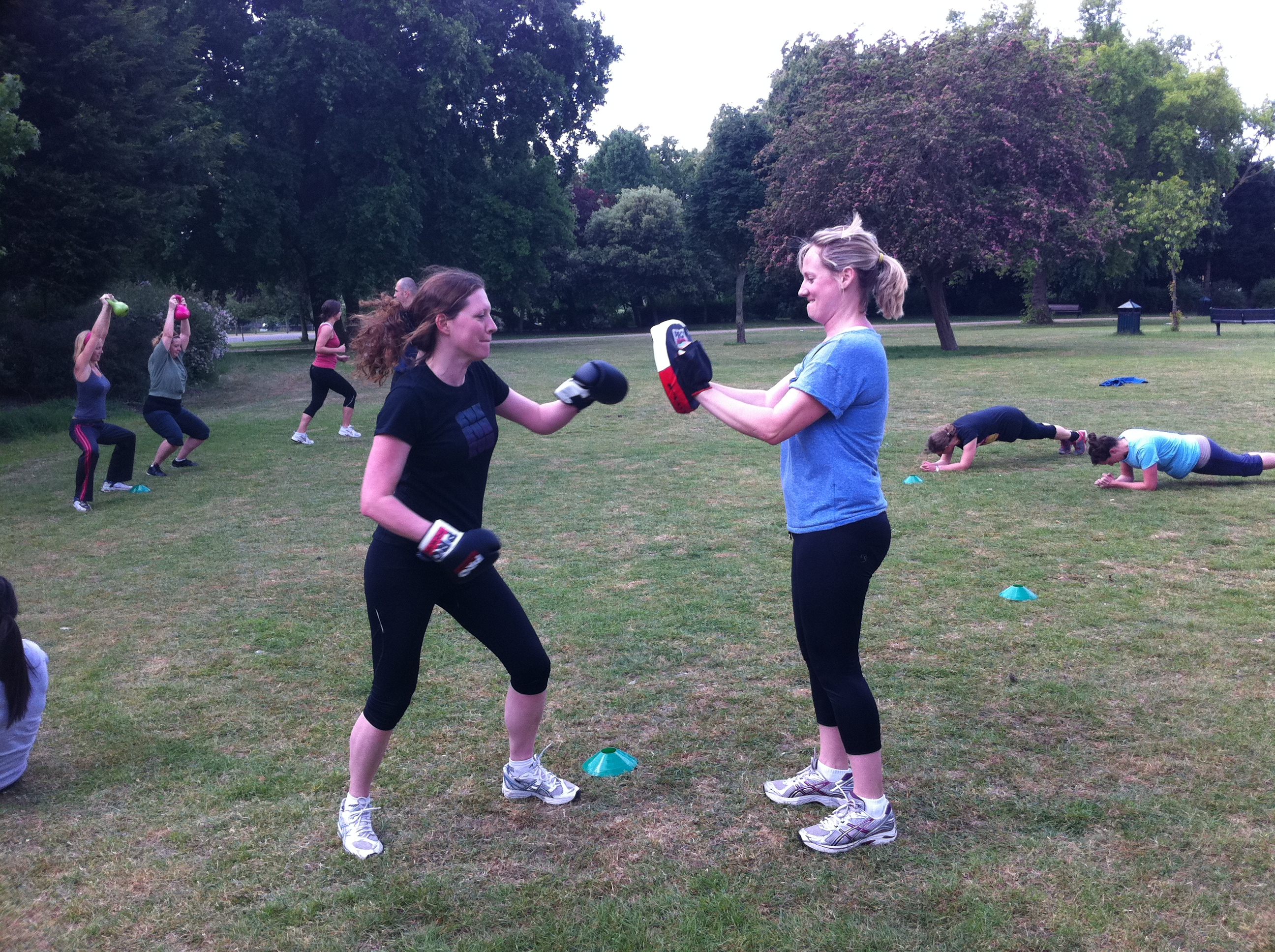
South West London outdoor group personal training
Does the thought of outdoor group personal training in South West London appeal
to you?
Many people going to the gym either find it boring or don’t get any results. Unless you
hire a personal trainer which can be very expensive the chances are you won’t really
know what to in the gym do to make your workouts fun and effective.
The other problem with joining a gym is the joining fees, expensive monthly payments,
one year contracts and aggressive 3 month cancellation policy. You see, when you join
a gym you may be getting classes, the latest gym equipment, towels and soap in the
showers, but that is it. You are paying to walk through the door and use the facilities –
nothing more. If you want any further expertise such as a personal trainer then you have
to pay more money, sometimes up to £50 an hour!
Nor do you get any nutrition advice (although many unqualified and unregulated personal
trainers will claim that they provide nutrition advice), nor will you get any regular goal
assessment and monitoring, motivation or accountability. You are basically left to your
own devices to use the gym as the club’s sales team peruse the elusive targets of
securing more sales and generating more members.
We also know for a fact that over 80% of gym members don’t get the result they’ve
signed up for and the health club industry knows this too. What’s also astonishing is
that 50% of a gym’s membership base is inactive at any one time! That means these
people are paying for nothing. So it’s no wonder why people are leaving the gyms in
droves and looking for better, more reliable and financially more viable options.
So what is the answer? If you are looking for great workouts that produce results in a
fun and sociable environment then outdoor group personal training in Balham South
Secrets that the gym goers don’t know
Manipulating hormones during exercise is one of the key elements to successful fat loss.
Research has shown that doing resistance training, particularly when performed in a
circuit as performed on an outdoor group personal training On Wandswoth Common
in South West London, increases certain hormones such as testosterone, cortisol and
growth hormone. The goal with this type of weight training circuit is to produce as much
lactate as possible in the working muscles. When lactate builds up in your muscles you
get that burning sensation as they quiver under the strain of hard exercise.
Lactate production is directly correlated to growth hormone production – so training hard
to produce as much lactate as possible is a great way to burn fat. Here’s how it works.
Lactate is an acid and as the lactate builds up in your muscles and blood your blood pH
goes down (becoming more acidic). This causes your growth hormone production to go
up. In the liver growth hormone is converted to a substance called insulin growth like
factor 1 (IGF1) and this causes more fat to be burnt during exercise thus making you
lose more body fat.
Blood lactate concentration is correlated to the amount and size of the muscles used
during an exercise. Therefore using exercises that target a large group of muscles such
as squats, kettle bell swings, walking lunges and many of the other exercises used in
outdoor group personal training in South West London is much more effective for
building up lactate than using an exercise that only uses a small amount of muscle mass
such as wrist curls.
This type of resistance training is also much more effective than doing cardio for weight
loss. Long slow cardio, like spending half an hour walking up hill on a treadmill (which
may be effective for initial weight loss if you are extremely over weight, but that weight
loss will soon plateau unless you change to another type of exercise) just taps in to your
type 1 muscle fibres, these muscle fibres respond to this type of exercise by getting
smaller and reducing androgen receptors. This also leaves your type 2 muscle fibres
(that can be anything up to and above 50% of your muscle mass) completely unused.
This is a disaster for weight loss! Imagine trying to fight a battle with only 50% of your
army active – you are going to lose that battle. The same is true for weight loss.
Also consider this, go into any gym in the world and you will see most of the fat unfit
people plodding along on the treadmill watching the TV of riding a bike whilst reading a
magazine. If you can watch the TV or read whilst you are training you are wasting your
time, you will not get any results, you do not belong in the gym and should go home and
park your arse on your sofa and watch TV or read there!
What you need to do is resistance training as your primary form of exercise. Resistance
exercise increases your muscle mass which will mean you burn more fat 24/7. It helps
increase your bone mineral density. It improves your immune system. It improves your
insulin sensitivity. And most importantly it helps you lose weight.
So if you want to weight loss results you should try the exercises in video link below.
Also consider joining an outdoor group personal training in South West London
class such as that offered by PeakXVfitness. At a fraction of the price of gym membership
and additional personal training we guarantee results.
4 Sneaky Hormones That Are Ruining Your Fat Burning!
4 Sneaky Hormones That Are Ruining Your Fat Burning! Much has been spoken
recently about the importance of hormones in fat burning and there are all sorts of
pills and potions that claim to be able to manipulate hormones to improve fat
burning but in this article we want to look into the four key hormones that
influence fat burning and weight loss. This will give you all the information you
need to make informed choices when it comes to food and activity. Whether you’re
on a diet or are taking part in vigorous exercise this information will be critical to
your success. The two main hormones we’ll look at first are insulin and cortisol and
we’ll show you how they synergistically work to mess up your weight loss efforts.
After that we’re going to describe the functions of two little known hormones –
leptin and grehlin.
Insulin
Many of you will have heard of the hormone insulin, perhaps some of you know a
person with type 1 diabetes who has to inject insulin many times a day to keep their
blood sugar stable, or perhaps you may be or know a person with type 2 diabetes
who has been told they have high levels of insulin or that they have insulin resistance.
But what actually is insulin and what does it do?
Insulin is a peptide hormone released from the pancreas in response to food being
eaten. Insulin’s job is to carry the breakdown products of carbohydrate digestion
– namely glucose – into the cells to be used for energy. Insulin also carries the
breakdown products of protein digestion – namely amino acids – into the cells for
a number of functions including protein synthesis. It seems that the breakdown
product of fats in the diet – namely free fatty acids – do not have an effect on
insulin. Insulin can communicate with all manner of cells in the body; muscle cells,
brain cells, liver cells and fat cells telling them to take in glucose and amino acids.
This mechanism works perfectly if there is a good balance of protein, fats and
carbohydrates in the diet. The problem arises when there is excess carbohydrate
in the diet, especially carbohydrates that release their glucose very quickly, which
leads to sharp rises in blood glucose levels. Once the liver and muscle cells are full
of the sugar they need insulin can no longer have an effect, however the fat cells
happily take up the remaining sugar from the blood stream and an interesting
thing happens. The glucose in the fats cells is metabolised to a substance called
glycerol 3 phosphate, which in turn can be converted to triglycerides, essentially
turning sugar in to fat.
When there is insulin floating around in the blood stream you body shuts off
lipolysis – the signals to burn fat. You see you can’t burn fat and store sugar at the
same time; you can only do one or the other. So keep your insulin low and your fat
burning turned on. This is vitally important for anyone who wants to reduce their
body fat to understand as without dietary modification fat loss will be futile.
Seek a nutrition consultation.
Cortisol
Stress is a major cause of weight gain. We tend to eat more when we are stressed
and use food as comfort, particularly sweet sugary foods. Stress comes in many
forms – food intolerances, alcohol consumption, financial stress, relationship
stress, mental emotional stress, poor blood sugar regulation etc… When you are
stressed you release the stress hormone cortisol. One job of cortisol is to raise
blood sugar by releasing fats and protein that are sent to the liver and converted to
glucose, however if this glucose is not used (as most of us are inactive when we are
stressed such as at work or sitting in traffic) it gets re-stored as fat – particularly
visceral fat that accumulates around the organs. Research has shown that stress
leads to the accumulation of fat stored on the tummy area. So if you want to lose
some weight, you are going to need to de-stress. As you can see both insulin and
cortisol work together to keep you fat particularly if you’re stressed and eat poorly.
This is why it’s vitally important to eat right, exercise and reduce the stress in your
life to get these sneaky hormones on your team.
Leptin and grehlin
Two hormones called leptin and grehlin are important in weight control. Leptin is
produced from white adipose tissue and from cells in the stomach. As you eat leptin
rises and tells the brain that you are full and you stop eating. However, with
conditions such as over eating and obesity leptin levels can become extremely
high leading to leptin resistance, a condition much like insulin resistance, where
lots of leptin is in the blood but your brain doesn’t respond to it any more. Therefore
you don’t feel full and carry on over eating. Increased leptin also causes increased
insulin production and can exacerbate insulin resistance, high blood sugar and the
accumulation of more fat.
Grehlin on the other hand stimulates hunger, increases food intake and increases
fat mass. It is produced in the stomach, the pancreas and hypothalamic arcuate
nucleus in the brain. We know from research that inadequate sleep is associated
with high levels of grehlin and leads to increased appetite and overeating, thus
getting adequate sleep is essential for weight control. So get plenty of sleep and
don’t over eat to control leptin and grehlin. These two hormones can in the right
environment (poor diet, insomnia and stress) team up to halt your fat loss plan.
In summary, to offset the downside of these very powerful hormones you need to
eat a good mixture of foods from protein, carbohydrate and fat sources. Taking up
a good fat burning exercise programme that decreases insulin resistance coupled
with good stress reduction measures should allow your body to effectively shed
body fat at a safe and sensible rate. If you’re interested in finding out precisely how
to do this check out this great online resource from our website:
Get fish into your diet
Expert Nutritional Therapist Steve Hines shares how he gets fish into his diet.
As an island nation surrounded by the sea and it’s rich produce you would think we
would be a nation of seafood lovers, however the palate of the British nation doesn’t
extend much beyond fish fingers, cod and chips and tinned tuna. This may in part
be due to the lost art of preparing and cooking seafood or to the fact that people
claim they don’t like fish. But it needn’t be this way. With a little bit of imagination
you can make fish and seafood taste delicious and it takes no time at all to cook.
If you take a trip down to your local fish monger you will see a whole host of
different produce and expanding your horizons beyond cod and tuna can reignite
your interest in this delicious food.
Look out for oily fish such as mackerel, sardines, trout, pilchards, herring as well as
salmon. Mackerel for instance is quite cheap, and trout is a cheaper alternative to
salmon. For white fish look out for pollock, sea bass, sea bream, gurnard as well as
cod and haddock. Some other types of fish such as pangasius, snapper, tilapia are
also becoming popular and can be bought at the fish monger. Then of course there
is seafood such as mussels, prawns, crab and cockles.
Fresh fish is always better but eating some tinned fish now and then is also a good
way to get more of this food into your diet. For instance as well as tinned tuna
tinned mackerel, sardines, pilchards and salmon can also be bought quite cheaply
in the supermarket
If you don’t know what to do with fish just try one of these simple recipes.
Mackerel pate
Drain then empty a tin of mackerel into a bowel; add a dash of olive oil, some
smoked paprika, salt and pepper and blend together with a hand held food
processor (or mush together with a fork). Spread over two rice cakes for a delicious
snack.
Baked salmon with roasted vegetables
Cover the salmon fillet in sesame seeds and set aside. Chop up some Mediterranean
vegetables such as courgette, aubergine, peppers and onions and roast them in
olive oil, garlic, chilli and thyme for 30 minutes or so. For the last 12-15 minutes of
the vegetables cooking throw the salmon in the oven and serve the salmon on a bed
of the vegetables.
Fish parcels
Use Pollock, sea bream, gurnard or mackerel. For a Mediterranean flavour place
the fish on a base of fennel in tin foil, add a dash of olive oil, some thyme and oregano
and some lemon juice. Fold up the parcel and place in the oven for 15 minutes at
180 degrees Celsius. Serve with a garden salad, chopped tomatoes and olives. For an
oriental flavour add the fish to a base of chopped chillies, ginger, garlic and lemon
grass, add a dash of sesame oil and tamari sauce and cook. Serve with whole grain
rice and some steamed bok choy.
Fish and chips
Dice up some potato or sweet potato into wedges (leave the skin on) and par boil
for 10 minutes, then toss them in oil or butter and place in a hot oven for 20-30
minutes until cooked and crisp on the outside. In the mean time take some white
fish like sea bass or pangasius, season with salt and pepper, bay leaves and a sprig
of thyme and steam bake (place some water in the bottom of the baking tray and
cover with foil) for 15-20 minutes. Serve with the potatoes and some tinned mushy
peas.
Welsh mussels
Dice up an onion and a leek and sweat down in some butter. Chop up some smoked
bacon back and add to the onion and leeks. Finally throw in your mussels and cover
until the mussels open and then serve. Throw away any mussels that have not
opened.
Squid salad
Chop up some squid and fry it off in some olive oil with chilli flakes, garlic, salt and
pepper. Serve on a bed of mixed salad.
There you go, quick simple and delicious seafood in less than 30 minutes
(often times 15-20 minutes). See below why nutritional therapist Steve Hines believes
we should be eating more protein like fish.
Reading Women’s Fitness
Peak XV Fitness holds regular outdoor workouts and is
considered the premier outfit for Women’s fitness in
Reading. The sessions take place in Christchurch
Meadows in Caversham in a beautiful setting down by
the river. The sessions are an hour long and are
attended by women in search of fitness from all over
the Reading and West Berkshire area. The intense
sessions are split into four sections each focusing on
different aspects of women’s fitness. Reading is not
well served by outdoor fitness providers and Peak
XV Fitness have only been operating their outdoor
Fitness Bootcamps for 18 months.
The first section of the Reading women’s workout
is the often overlooked dynamic flexibility. It is
often wrongly thought that slow static stretching is
good at the start of the workout but nothing could
be further from the truth. Research into women’s fitness
has consistently showed that static stretching pre
workout can often lead to muscle and tendon injury.
It is much more sensible to begin the workout with a
structured progressive dynamic warm up where the
movements expected in the workouts are replicated
at ever increasing intensity. This not only decreases
the likelihood of injury amongst participants but also
prepares the muscles, joints and nervous system for the
rigours of the session ahead.
The next section of the women’s fitness class is the
circuit training portion. The coaches at Peak XV Fitness
particularly focus on body weight exercises which are
great for sculpting the female body without adding bulk.
Functional exercises like squats, push ups, lunges and rows
are common and are often supplemented with band exercises
and kettle bell drills to maximise the calorie burn effect.
Next High Intensity Interval Training (HIIT) running drills are
used by the instructors both to burn maximum fat but also to
improve the cardiovascular fitness of the ladies. Popular drills
include repeated 40 metre sprints with short rest periods. Ten
minutes of this high intensity work is followed by a controlled
cool down and static stretch. This is the time to do the static
stretches, according to the team of coaches, where Reading
women’s fitness participants are encouraged to hold the
stretches for up to 30 seconds in order to restore muscle
length and alleviate some of the next day’s muscle soreness.
All members of the Reading women’s workout group also get
full nutritional support in the form of a monthly meal plan and
shopping list, courtesy of in house Nutritional Therapist Steve
Hines. Steve encourages the girls to eat regularly to keep their
energy up and to base their main meals around healthy protein sources
such as meat and fish and supplement this with plenty of fruit and vegetables.
He encourages them not to be fat phobic and to get healthy fats in the form of
Omega 3 oils which are great for weight loss.
Anyone wishing to benefit from the expertise of the team
at Peak XV Fitness and is specifically looking for a women’s workout
in Reading should go to www.peakxvfitness.com/bootcamps and
request an information pack. They have several successstories on
their website that show the results that can beachieved with a little hard
work and dedication.
Balham personal training
Manipulating hormones during exercise with a personal trainer or
outdoor personal training group is one the key elements to successful fat loss.
Research has shown that doing resistance training, particularly when performed in
a circuit as demonstrated in the workout video clip, increases certain hormones
such as testosterone, cortisol and growth hormone. The goal with this type of
weight training circuit is to produce as much lactate as possible in the working
muscles. When lactate builds up in your muscles you get that burning sensation as
they quiver under the strain of hard exercise.
Lactate production is directly correlated to growth hormone production – so
training hard to produce as much lactate as possible is a great way to burn fat.
Here’s how it works. Lactate is an acid and as the lactate builds up in your muscles
and blood your blood pH goes down (you become more acidic). This causes your
growth hormone production to go up. In the liver growth hormone is converted
to a substance called insulin growth like factor 1 (IGF1) and this causes more fat to
be burnt during exercise thus making you lose more body fat.
Blood lactate concentration is correlated to the amount and size of the muscles
used during an exercise. Therefore using exercises that target a large group of
muscles such as a squat is much more effective for building up lactate than using
an exercise that only uses a small amount of muscle mass such as wrist curls. When
you perform a circuit of exercises for one set of muscles such as the quads you get
a huge lactate build up. The exercises shown in the video clip are:
A1. Kettle bell thrusters x 20
A2. Lunge to single arm Kettle bell press x 20
A3. Kettle bell standing good morning x 20
A4. Kettle bell deadlift to upright row x 20
This circuit is similar to the type of exercise performed by PeakXVfitness on their
Wandsworth Common women’s outdoor fitness bootcamps
targets the legs and should only take 1-2 minutes to complete but you
are certainly going to feel it. After you have finished the A4 exercise rest for 2-3
minutes and repeat the circuit again and rest for a further 2-3 minutes. Try to do
as many circuits of this as you can in 20 minutes for a great lower body lactate
workout. You should feel nauseous within 10 minutes of doing fat loss circuits like
this as the lactate builds up, if not you are not training hard enough.
If you really want to get supper results pick different exercises for different body
parts and train twice a day 6 days a week for 2 weeks, then back off for a week only
training once a day. Here is an example:
Day 1 Quads circuit a.m. posterior chain circuit p.m.
Day 2 Chest and triceps circuit a.m. back and biceps circuit p.m.
Day 3 Repeat day 1
Day 4 Repeat day 2
Day 5 Repeat day 1
Day 6 Repeat day 2
Day 7 off
Remember the more weight you use for a given exercise means the more calories
are burned. Therefore remember to use large compound exercises such as squats,
lunges, dead lifts, presses and rows through the circuits.
This type of workout is also great if you are stuck in a hotel on business or on
holiday or even out in a park where you have no or minimal exercise equipment as
all you need is one kettle bell, just pick 4 exercises and perform 20 reps of each
exercise in a circuit to create that lactate build up.
How To Get The Body of a Kardashian.
Everyone knows the glamour and glitz associated with the Kardashian girls particularly after the recent, albeit, short lived marriage of MTV star – Kim. We’re going to look behind the celebrity curtain and find out how you can get the body of a Kardashian. We’ve gleamed this info from TV shows and magazine articles along with making some assumptions so we can’t claim the information is straight from the girls themselves. The girls are all of a similar age and report the same problems with their body image.
When a woman reaches her late twenties and early thirties, as the sisters have, she may have had children and also have additional family responsibilities that spare her little time to take care of her figure. This situation facilitates gaining weight which suggests that weight loss for women is hugely important at this age.
Also, due to natural hormonal changes at this age she also becomes vulnerable to additional weight gain. As a woman gets older and reaches her thirties, her body metabolism slows down resulting in less calories being burnt and this leads to the gaining of more weight as all three girls regularly complain of. Though the situation starts with weight gain it can progress to various health-related issues such as heart disease and cancer.
Therefore, it is highly essential that you take appropriate measures so that you maintain a perfect body weight at this age and also prevent yourself from undesirable health risks. Healthy eating habits and regular physical activities including structured exercise are vital to attain and maintain a healthy weight. One popular technique to lose weight is to try and burn more calories than you consume, however, this is a far too simplistic approach to weight loss. A more important strategy is to look where the calories actually come from. According to the Kardashian’s nutritionist the girls stay slim on lean meats and fish with plenty of green vegetables and salad.
Exercise
The importance of physical exercise in reducing weight cannot be overemphasized. This is one of the best ways to reduce weight. If you are a woman in this age group, you need to do physical exercise to increase the total amount of calories burnt and also to improve your rate of metabolism.
Like Kim and Courtney you need to do plenty of cardiovascular exercise, such as running, swimming, jumping rope and biking etc. for at least 30-60 minutes every day. Chloe prefers regular weight training in her routine and we suggest you do to. Regular exercise will increase your muscle mass and also raise your resting metabolism. You can also improve your naturally slowing metabolism by incorporating short walks at different times in the day. The girls walk for 10 to 15 minutes per day 3 times a week.
Nutrition
Consuming nutritious food has got the greatest impact on your weight loss programme. It is necessary that you consume organic lean meats and lots of green stuff. This will not only add less calories to your body, it will also make your workouts highly effective by giving you the protein to increase your metabolism in order to lose weight.
Planning Meals
At this stage in life, with all your other responsibilities, you need to plan your meals and snacks for the week ahead. You may not have a private chef like a Kardashian but you must eat healthy foods not junk foods like pizza, chocolate and Krug champagne etc. and instead of taking three large meals you must take five to six small meals to keep your metabolism elevated. Fruits, vegetables, lean protein and healthy carbohydrates must be consumed in a balanced manner regularly. You should also curb your emotional craving for food by finding ways to alleviate the cravings through other means.
The Kardashian girls, as far as we can tell, keep their figures with a combination of regular exercise and sensible nutrition.
The above weight loss tips for women will certainly help you to achieve the desired weight loss along with many other health benefits for a gorgeous, lighter and leaner body.
Wandsworth common women’s outdoor fitness bootcamp
Could joining PeakXVfitness Wandsworth Common women’s outdoor fitness bootcamp be the answer to your New Year weight loss programme? January will undoubtedly see a huge rise in the number of people who want to lose weight, get fit and become healthier. The gyms will be packed with people with good intentions slogging away on the treadmill. But the sad fact is that by February and March, there is a huge drop off in the number of people who joined the gym.
This happens for a number of reasons. First and foremost people get bored. Most people who go to the gym are not experts in the fitness industry and do not really know how to design themselves interesting and effective training programmes. Unless you can afford a good personal trainer who changes your programme often and can keep you motivated you will very likely get quite bored of doing the same routine in the gym. But this can be expensive as the going rate for a personal trainer is about £40 an hour, and that’s on top of your gym fees. So if you want results from the gym it could cost you about £400 a month! Secondly, people don’t see the results they were hoping for. In 2-3 months of good training you should be able to lose anywhere from 6-10kg and up to 10% body fat. However this is rarely achieved probably due to the fact that people don’t know what to do and get bored.
Why would joining PeakXVfitness Wandsworth common women’s outdoor fitness bootcamp help you? Group training like this provides a safe, sociable and comfortable environment in which to train. You won’t feel self conscious, out of place or like a fool as many people do in the gym, you’re not surrounded by grunting, sweaty males throwing their weights around and as with any group programme there is a great support network that provides accountability and motivation. These two things along, regardless of the training programme, will give you a better chance of achieving your fitness and weight loss goals.
PeakXVfitness Wandsworth common women’s outdoor fitness provides great workouts every time. These workouts are designed by experts in the fitness industry meaning all you have to do is turn up and do the session to get the results. It’s like having your own personal training to tell you what to do and encouraging you through each workout. You may be challenged to do kettle bell, medicine ball, band, dumbbell or bodyweight resistance exercises; you may be put through Tabata training, skipping, boxing and core workouts and high intensity interval training – workouts that are proven to help you lose weight. As many of our customers can attest we guarantee results.
You know you have a good health and fitness expert helping you when they are more interested in YOUR results than anything else. This is why nutrition support is vital and this advice should be provided for you. But not just nutrition support provided by personal trainers (who invariable have very little nutrition training), but by qualified nutritional therapists with an expertise in weight loss.
You may have heard that getting your nutrition right is half the battle; well we would suggest that it contributes to up to 80% of your results. So if you get the wrong advice or even more alarmingly decide to go on an unsupervised diet you are doomed to fail. Very few people who go on a diet reach their weight goal and can maintain it long term unless they are supervised, encouraged through the difficult times, provided accountability and motivation.
If you want to get in shape this New Year visit www.peakxvfitness.com/bootcamps to find out more.
Fitness in Reading
Fitness in Reading
This New Year leading Reading Fitness company, Peak XV Fitness, is offering these top three tips to get you back in shape. For people interested in fitness in Reading these tips will prove invaluable.
The first tip is to set a goal, and more importantly, write it down, or better still, to tell someone else about it. This will keep you accountable. Once you’ve set your goal, whether it be a fitness goal or a weight loss goal then you can devise a plan or roadmap as to how you’re going to get there. For example, for our Reading fitness clients we tell them to imagine how they would look and feel in their ideal body. Whether it’s a certain weight, or a certain look we get our clients to write this down. If they want to lose a stone in 8 weeks leading up to a holiday, and can picture themselves in that bikini, then we can work out that they need to lose less than a pound a week to hit their weight goal and then target the muscle groups that make them look amazing in a bikini three times a week to reach their aesthetic goal.

This makes the whole process less daunting and much more achievable as it is broken down into bite size chunks.
The second tip is to move more. Obviously if you come to our Reading Fitness Bootcamps then you’ll be burning hundreds of calories at every session. Ofcourse going to the gym, playing sports or joining a running club are also great ways to move and get fit. But away from that there’s simple things you can do to raise your metabolism like climbing the stairs, taking a lunchtime walk, playing games with your kids and ofcourse everyone’s favourite – sex!
The final tip we have for you to increase your fitness in Reading this New Year is to mix up those cardio sessions. So many people hit the roads in January and do long slow runs when high intensity interval training not only burns so many more calories per unit of time, but also increases your VO2 max (a measure of maximal aerobic fitness) thereby sending your fitness levels through the roof as well.
If you’re starting off a fitness programme in Reading this New Year these simple pointers will get you off to a great start. If you want the benefit of a structured workout with like minded people then why don’t you come in for a free week at our Reading Fitness Bootcamp in Caversham – we’d love to see you.
Happy New Year.
The little book of nutrition tips – PMS
Female health problems include pre-menstrual syndrome (PMS), poly cystic ovarian syndrome (PCOS), endometriosis, fibroids, osteoporosis, symptoms of the menopause and infertility. The aetiology of these health problems are multi layered and often complicated, however there are some common underlying causes to all of them including hormonal imbalances, stress, poor nutrition and lack of nutrients, environmental oestrogens and poor detoxification.
The symptoms of PMS are varied and effect up to 90% of all women. The cause is still unknown. Different hypotheses as to the cause of PMS include hormone imbalance, a lack of essential fatty acids, a lack of B vitamins, magnesium, chromium, zinc and poor blood sugar control. PMS has been classified into four categories described below. Unfortunately many women may not fit neatly into each category and may have a mixture of these symptoms.
1. PMS-A (anxiety) includes mood swings, irritability, tension and fits of rage. This is the most common type affecting 40-60% of women. This may be due to poor liver function, gallstones and poor gut health. Anxiety can be caused by low serotonin levels therefore eating more protein; specifically tryptophan is required (5HTP would be a good supplement). Supporting the liver and the clearance of oestrogens may also help.
2. PMS-C (cravings) including sugar cravings, headaches and fatigue. This may be due to magnesium deficiency, pancreas insufficiency or inflammation. Dark chocolate and green leafy vegetables help increase magnesium. Eating small regular meals, high in protein and healthy fats and using fenugeek, R alpha lipoic acid, B3, fish oil, cinnamon, zinc, B6 and chromium can support the pancreas and reduce inflammation.
3. PMS-D (depression) includes depression, confusion and poor coordination. This may be due to low levels of the neurotransmitters serotonin and dopamine due to a lack of protein in the diet. It may also be due to an imbalance of fatty acids. Taking evening primrose oil that contains GLA and taking fish oil can help correct this.
4. PMS-H (hyperhydration) includes water retention, breast tenderness, breast enlargement, abdominal bloating, and weight gain. This may be due to poor mineral balance and increased aldosterone that causes the tubules of the kidneys to retain sodium and water. These women need to use Celtic Sea Salt and alkaline minerals such as potassium and magnesium orrotate. Diuretcis such as raspberry leaf tea, green tea and taurine may also help. Doubling the intake of a multivitamin and mineral for 5 days before your period starts may also be useful.
Many of the symptoms of PMS are also symptoms of poor blood sugar control and this may be the major contributing factor. First of all simply follow the blood sugar control advice in my book and then investigate and try some of things I suggests for water retention and bloating, headaches or depression. The supplements magnesium, B6 and evening primrose oil for GLA may be very useful to manage PMS.
To find out what foods and nutrients support your hormonal health Steve Hines Little book of nutrition tips now is available at
http://www.amazon.co.uk/little-book-nutrition-tips/dp/0956670113
The little book of nutrition tips – Cardiovascular health
Heart attacks and cardiovascular disease are one of the biggest killers in the western world. Improving your cardiovascular health by following the advice in this section could save your life.
One very well known and widely reported study called The Lyon Diet Heart Study tested the effectiveness of the Mediterranean diet in a group of people that had already suffered a heart attack. After 4 years those who followed the Mediterranean diet had between 50-70% decreased risk of recurrent heart attack, angina, stroke and death even though their cholesterol levels did not change. What this means is just because you have already had a heart attack it is not too late to make significant changes to your health. It might also suggest that having high cholesterol is not necessarily the problem it is made out to be, especially when you have already suffered a heart attack.
Another study introduced the concept of the “poly meal”. Seven foods that are known to reduce cardiovascular disease if consumed together on a daily basis in a “ploy meal” could reduce heart disease by 75%.
These were:
• Fish
• Garlic
• Vegetables
• Nuts
• Fruit
• Red wine
• Dark chocolate
Another thing to think about is your blood pressure. Reducing your blood pressure can also significantly reduce the risk of heart attack and stroke. One thing that is very important for blood pressure is to control your salt intake. Eat the DASH diet. This is essentially a diet low in sodium, lower in carbohydrate, higher in protein and essential fats. It is also higher in vegetables and lower in grains, fruit and dairy.
Example:
• Meat, poultry and oily fish 2-4 servings a day
• Vegetables 6-8 servings a day
• Fruits 2 servings a day
• Dried beans, seeds and nuts 1-2 servings a day
• Low fat dairy products 0-2 servings a day
• Cereals, grains and pasta 0-2 servings a day
• Fats and oils 4-5 servings a day (mainly unsaturated fats like olive oil, fish oil, however some saturated fat is allowable)
• 50 grams of fibre a day (a mix of soluble and insoluble)
To find out what foods and nutrients support your heart and to eat to prevent heart attacks and strokes Steve Hines Little book of nutrition tips now is available at
http://www.amazon.co.uk/little-book-nutrition-tips/dp/0956670113
or watch Steve talk about the book on YouTube here